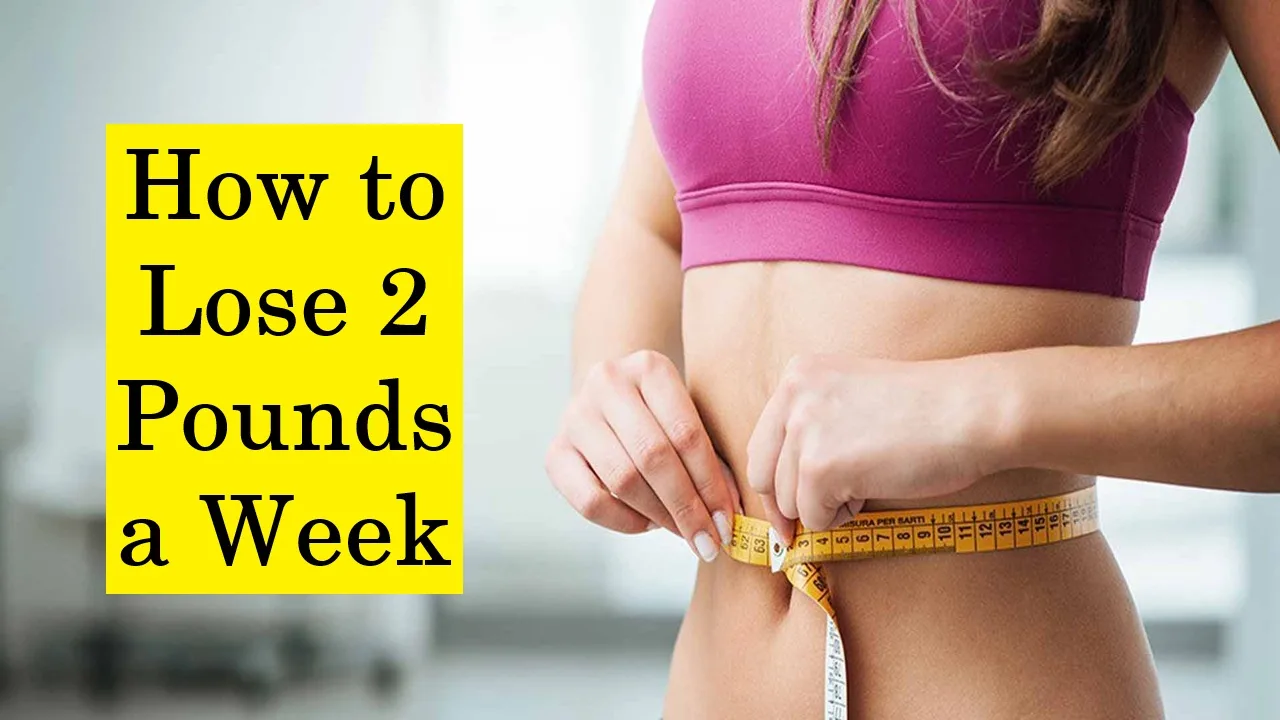
How to Lose 2 Pounds a Week by Cutting 3500 Calories from your diet:
Calculate Your BMR and then come back to this page.
So, you’ve calculated your BMR and now know that to lose 2 pounds a week you should…
A.) Cut 3500 calories from your weekly diet, and…
B.) Burn 3500 calories through increased physical activity.
Note: 1 pound of body fat is equal to 3500 calories. In order to lose 1 pound of body fat in one week you must cut your food intake for 500 calories each day for seven days. To know exactly how to do this check out our post on “How To Calculate Your BMR” – above
Key Details of Lose 2 Pounds a Week by Cutting 3500 Calories
| Focus Area | Key Points From Article |
| Weight Loss Goal | Lose 2 pounds a week |
| Core Rule | 1 pound of fat = 3500 calories |
| Weekly Strategy | Cutting 3500 calories from diet + burn 3500 through activity |
| Daily Deficit | 500 calories per day |
| Main Target | Liquid calories from drinks |
| Key Habit | Read nutrition labels and serving sizes |
| Smart Swap | Whole fruit instead of fruit juice |
| Example Savings | Up to 900+ calories/week from drink changes |
| Diet Tip | “All-natural” and “low-sugar” don’t mean low-calorie |
Also Read:- The Best Pre-Workout Breakfast for Fat Burning, According to Research
But where do you start? Here’s the first in a series of ideas on how to cut 3500 calories a week through diet and exercise, without suffering Pin
How to Cutting 3500 Calories From Your Diet: Tame Your Thirst and Trim Your Tummy:
We’re going to skip the stuff about colas, sodas, kool-aid, milk-shakes and giant mochas with chocolate syrup. These are no-brainers when it comes to trimming calories from your diet. But, there are a few other points to keep in mind for staying hydrated, healthy, and calorie-aware. In fact, if you regularly drink any prepared beverages including energy drinks, teas, flavored waters and especially juices, you could save hundreds of calories. You may even reach your 3500 calorie goal.
First: Read the back labels, forget what the front labels say:
- High Protein or Low-Carb, can also mean High Calories.
While protein has a good side, it also has a bad one. It will head straight for your waistline, just as sugars and fats do, when your total calorie intake is too high. Calories eaten and calories burned, is what fundamentally matters when it comes to weight loss. There are no “good” calories or “bad” calories, just calories. Instead there is nutritious food or junk food, and either can be high or low-calorie.
Protein shakes and smoothies (or low-carb beverages) can be very high in total calories. This includes protein powders and supplements, many of which are made specifically for bodybuilders and athletes who need the extra protein and calories to add muscle. For the average dieter, the extra protein (and calories) simply translates into more body fat.
- Pay Special Attention to Actual Serving Sizes.
Most bottles have 2 1/2 servings in them, canned beverages have at least 1 1/2, some products have even more.
- Low-Sugar, No-Sugar-Added, or No-HFCS doesn’t mean much.
Manufacturers have been taking advantage of sweet-tooths for years, and now health-conscious sweet-tooths aren’t safe either. There are several ways to add extra sweetness (and calories) without adding sugar, technically. The most common method is by adding fruit juices and concentrates. Another is by mixing in syrups or fruit pulps. Though a product is naturally sweetened or without-added-sugar it could still have tons of calories.
- All-Natural is not Low-Calorie.
This follows the last point. One good example is Naked Brand Juices. This is a line of natural fruit juice blends. According to their site, each bottle contains about 1 lb. of fruit and/or vegetables. They’re also delicious and loaded with naturally occurring vitamins and antioxidants; a great product. Yet each bottle contains about two servings– This means that one small bottle of Naked Protein Zone, not only has 30 g.of protein and a pound of fruit, but almost 440 calories also. Their Chai Spiced Apple Cider, on the other hand has only about 240 calories per bottle (and 4 and 1/2 apples!).
Also Read:- Stop Yo-Yo Dieting: Why Mindset and Habit Change Matter More Than Diets
Fruit Juice vs. Fruit
All in all, fruit juice is okay, but not if you’re on a low-calorie diet. Store-bought juice is often not as fresh as it could be, and many of the nutrients and antioxidants break down while sitting on the shelf. Worse, the fruit has been squeezed, filtered and/or concentrated then pasteurized with heat, so the most potent nutrients are removed or destroyed, especially the delicate antioxidants, fiber, and *pectin. All three of these nutrients benefit weight loss. Unfortunately, they are found in the parts of fruit most often filtered out by processing:
Blueberries- antioxidants and fiber: skins
Grapes – antioxidants and fiber: skins
Oranges and Grapefruit – pectin: white rind of peel (pith)- fiber: skins encapsulating the sections of pulp
Apple – antioxidants and fiber: peel – pectin: pulp
*Pectin: A soluble fiber which, some studies have shown, may help reduce cholesterol levels, promote stable blood sugar levels, support colon health and prevent colon cancer, and can aid weight loss by naturally curbing hunger.
While the best nutrients for dieting and health have been removed, the fructose (fruit sugar) has not. Hence, many juices have more calories per serving than their fresh counterparts:
Welch’s 100% Concord Grape Juice (8 oz.): 170 calories
VS
1 Cup of Concord Grapes: 62 calories
If you normally drink one glass of grape juice a day and switch to eating grapes instead, you would knock off 108 calories/day or 756 calories/week.
Tropicana Pure Premium Orange Juice (8.1 oz. serving): 110 calories, 0 g. fiber
“Lots of Pulp” Version also has 0 g. of fiber… I was surprised too : )
VS
1 Orange: 60 calories, and 3.1 g. of fiber (13% of Daily Value)
If you drink a glass of orange juice every morning, and switch to a medium sized orange, you would save 50 calories/day and 350 calories/week. You’d also be getting more diet-friendly nutrients in addition to your vitamin C.
V8 Splash, Mango Peach (8 oz.): 80 calories, 0 fiber
VS
1/2 Cup of Mango slices: 55 calories, 1.5 g. fiber
1/2 Cup Peach slices: 33 calories, 1.25 g. fiber
If you switch from V8 splash to real fruit, you won’t save any calories, but you will get the fiber, pectin, and antioxidants that will help keep you healthy and curb cravings.
Slim Fast Optima, Strawberries and Cream (1 can): 180 calories, 5 g. of fiber
VS
1 Cup Fresh Strawberries, in half-slices: 49 calories, 3g. fiber
Switching from a concoction of hard-to-pronounce ingredients and artificial flavorings to the real thing will save 130 calories/day or 910 calories/week.
POM Blueberry, 100% juice (8 oz.): 160 calories, 0 fiber
VS
1 Cup Fresh Blueberries: 83 calories, 3.5 g. fiber
POM Blueberry is a quality product, but not even the best can hold their own against real fruit. Making the switch can save nearly 80 calories/day or 560 calories/week. Fresh blueberries are a great diet food and may even help fight belly fat.
Not all Energy Drinks and Flavored Waters are good for weight loss:
Many Energy Drinks not only have numerous additives, but also contain loads of sugar. There are many low-calorie and calorie free-alternatives available, so if you must have your power-shot, opt for one of those.
Some flavored waters are not calorie free:
Glaceau’s Water, Vitamin Water, Focus Kiwi Strawberry (8 oz.): 50 calories
Glaceau’s Water, Vitamin Water, Essential Orange Carrot (8 oz.): 50 calories
Langers’ Water, H2O Vitamin Enhanced, Power Pomegranate (8 oz.): 50 calories
Langers’ Water, H2O Vitamin Enhanced, Energy Green Tea (8 oz.): 50 calories
The best low-calorie and zero-calorie beverages of course, are flavored waters and teas made at home. The only calories are the ones you add in.
Studies have shown that water can aid weight loss. Yet, if you don’t like it plain, there are a few ways to infuse flavor without artificial sweeteners or extra calories. Click here to find out how to naturally flavor your own water at home and to find information on water and weight loss research.
When it comes to tea, green tea is the best for weight loss since it contains special antioxidants called catechins which help spur metabolism. But, did you know, that to make these better available to the body, you should add citrus? For more information.
Aside from green tea, herbal teas also contain antioxidants and a sweet taste without having to add sugar, especially when they’re chilled first. Look for fruit-based teas like peach or mango, and red teas.
Tea, in and of itself, (no matter if it is fruit-based, herbal, black or green) has zero calories. However, companies can’t seem to keep it that way when they brew it. For example, compare:
If you add a teaspoon of sugar to 8 oz. of tea, you’re only getting 15 calories. In comparison, 8 oz. of Lipton’s bottled iced tea contains roughly 70-90 calories. You could even add a tablespoon (45 calories) to your tea, and still come away with fewer calories than Lipton’s presweetened version. You’ll also consume more healthy antioxidants and less artificial ingredients:
Lipton’s Peach Iced Tea ingredient list is as follows:
water, high fructose corn syrup, tea, citric acid, sodium, hexametaphosphate, natural flavors, malic acid, phosphoric acid, sodium benzoate and potassium sorbate, caramel color, calcium disodium EDTA.
source: Lipton tea website
Liquid calories make up 22% of the average American’s diet, making this the starting point for cutting calories. It’s also an easy way to begin adopting healthy, sustainable habits that will benefit you for life. Here you find How to count calories
Disclaimer: This content, which includes advice, only offers general information. It is by no means a replacement for a professional medical opinion. For additional information, always speak with a specialist or your physician. This information is not the responsibility of Dietivity.