When we exercise, especially when we want to lose weight, we make good use of the calories from food and thats how exercise burns fat. Without exercise, or living a sedentary lifestyle, those pesky energy units are stored away as extras in fat cells to be used as needed. Pesky? Definitely, if we fail to balance calorie intake with calorie output.
You see, our body clings to a time far gone, without the modern conveniences we enjoy today, like for example transportation or a food market. Back to when people ran sudden powerful sprints, or endured lengthy runs hunting down food. Obesity wasn’t a problem then as it is today and energy stores on the body were vital for early humans to survive famine or make it by foot through miles of migrating walks.
Key Details of How Exercise Burns Fat
| Key | Detail |
| Calories & Fat Storage | Excess calories are stored as fat when intake exceeds energy output, especially with sedentary living. |
| Energy Balance | Fat loss occurs only when exercise and daily activity create a sustained caloric deficit. |
| Muscle Mass | Maintaining muscle increases resting metabolic rate and supports long-term fat loss. |
| Fat Oxidation | Fat used during exercise does not equal fat loss; total energy expenditure matters most. |
| Energy Systems | The body uses immediate, anaerobic and aerobic systems depending on exercise intensity and duration. |
Yet, even when we are eating healthy foods our body, more often than not, has calories to spare which must be stored, usually around the girdle, arms and legs as fat, also called adipose tissue.
Knowing how your body utilizes energy can help you understand different activities and exercise routines that target fat stores as well.
Also Read:- The Glycemic Index: How Carbs Affect Blood Sugar and Health
Also Read:- How the Body Breaks Down Carbs for Energy Into glucose
Energy Balance and Caloric Deficit in Weight Loss
For weight loss to occur, exercise must contribute to a caloric (energy) deficit, meaning the body expends more energy than it takes in through food. While exercise increases calorie output by activating the immediate, anaerobic and aerobic energy systems, fat loss happens over time when stored energy – primarily from adipose tissue – is repeatedly called upon to meet this deficit. Scientific evidence confirms that both aerobic exercise and resistance or high-intensity training support weight loss by increasing total daily energy expenditure and preserving lean muscle mass, which helps maintain a higher resting metabolic rate. Without a sustained caloric deficit, fat stores will not be significantly reduced, even if exercise is performed regularly.
Role of Muscle Mass in Fat Loss
Skeletal muscle is metabolically active tissue, meaning it requires energy even at rest. Scientific research shows that maintaining or increasing muscle mass through resistance training raises resting metabolic rate (RMR), allowing the body to burn more calories throughout the day. During weight loss, preserving muscle mass is important because loss of muscle can slow metabolism and reduce long-term fat loss. This is why combining cardiovascular exercise with strength training is effective for sustainable weight reduction.
Fat Oxidation vs. Fat Loss
While low- to moderate-intensity aerobic exercise relies more heavily on fat as a fuel source during the activity, total fat loss depends on overall energy expenditure, not just the percentage of fat burned during exercise. Higher-intensity workouts may rely more on carbohydrates during the activity but can result in greater total calorie burn and increased fat utilization after exercise.
Hormonal Influence on Fat Loss
Exercise influences hormones that regulate fat metabolism and appetite. Hormones such as epinephrine, norepinephrine, growth hormone and insulin play a significant role in mobilizing fat from adipose tissue. Regular physical activity improves insulin sensitivity, which helps reduce fat storage and supports the use of fat as an energy source during and after exercise.
Consistency and Adaptation
Physiological adaptations to exercise occur gradually. Consistent training improves mitochondrial density, capillary supply and enzyme activity involved in fat oxidation. These adaptations allow the body to become more efficient at using fat for energy during prolonged exercise, which supports long-term weight management rather than rapid, short-term weight loss.
Adenosine Triphosphate
ATP(adenosine triphosphate) is a chemical compound in your muscle tissues and all the other cells of the body using energy. In the process of creating energy, the ATP molecule breaks down and changes into ADP (adenosine diphosphate), having lost one of its three phosphate groups.
- The major fuel source comes from carbohydrates in food which, due to the process of digestion, convert to glucose molecules, entering the blood stream. The glucose molecule lends a phosphate group to recycle the ADP back into ATP. Glycogen, stored in the muscle and liver is broken down to create ATP.
- Fat stores within the Adipose tissue underneath your skin can also be used as energy source to generate ATP from ADP. First, three fatty acids, triglyceride, are broken apart by an enzyme called hormone sensitive lipase. This enzyme is influenced by the hormone epinephrine, we also know as adrenaline. During cardio exercise, adrenalin stimulates the breaking down of triglycerides. This process is called lipolysis, releasing ketone bodies for energy.
- Protein can also be broken down to provide energy, but only during prolonged exertion.
Post-Exercise Oxygen Consumption (EPOC) and Recovery Energy Use
After exercise—especially high-intensity or interval training – the body continues to consume more oxygen than it does at rest. This phenomenon is called Excess Post-Exercise Oxygen Consumption (EPOC). During EPOC, the body expends additional energy to restore physiological balance, including replenishing ATP and creatine phosphate stores, clearing and recycling lactate, re-oxygenating muscle tissue, lowering body temperature and normalizing heart rate and breathing. Scientific studies show that higher-intensity exercise produces a greater EPOC effect than steady, low-intensity exercise, meaning more total calories are burned after the workout has ended. This added energy demand contributes to fat utilization over time and helps explain why interval and resistance training are effective components of weight-loss and metabolic health programs.
APD can be recovered in three different ways. Two of those ways are anaerobic, meaning without oxygen. The third way is aerobic, meaning with the help of oxygen.
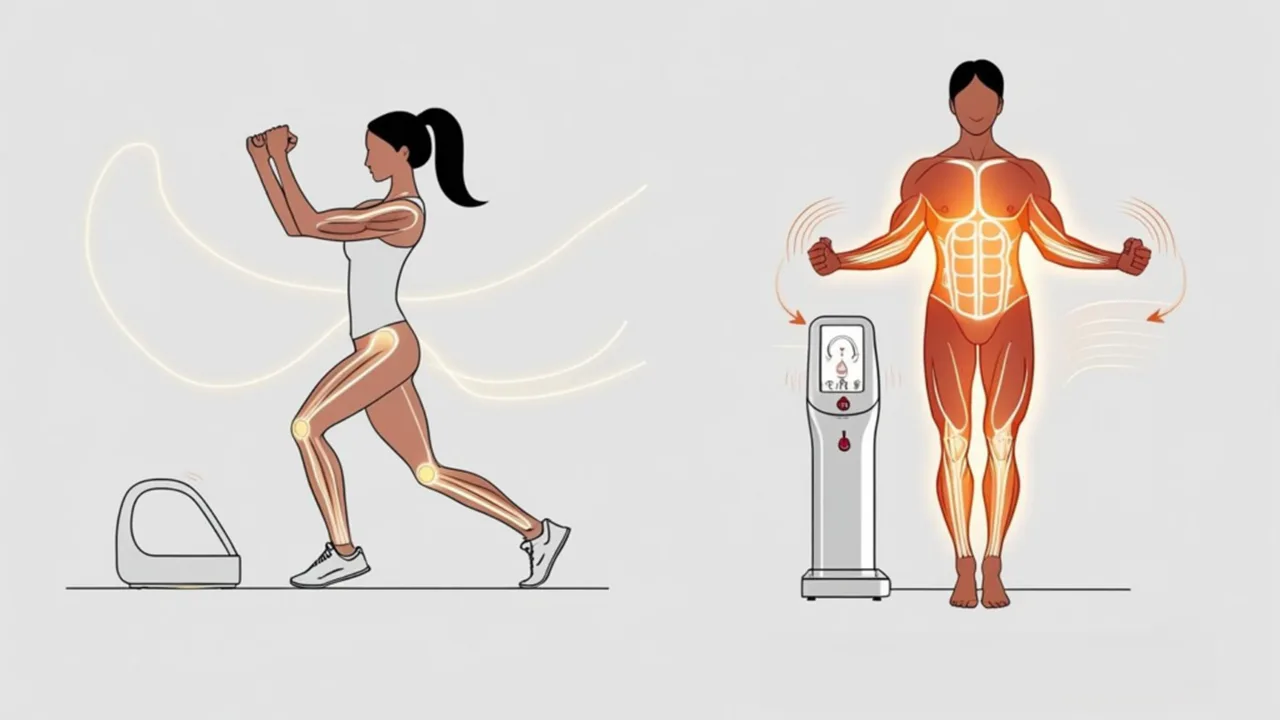
Three Energy Systems for Sustainable Weight Loss
The Immediate Energy System:
- Breaks down ATP (adenosine triphosphate) already stored in cells and uses CP (creatine phosphate) to quickly make more ATP if needed. CP is available only for a few seconds.
- Feeds energy to muscles rapidly, lasting about 10 seconds
- Exercise: lifting a heavy weight, getting up off a chair, jump aside, picking up a child
- Oxygen: Is not used during activity
The Anaerobic (Nonoxidative) Energy System
- Makes a great amount of ATP (adenosine triphosphate) by breaking down glucose, a simple sugar and glycogen, a complex carbohydrate, stored in the liver or skeletal muscles
- Feeds energy to muscles rapidly
- High intensity activity, lasting about 10 seconds to 2 minutes
- Exercise: Fast, short run up the hill, running up flights of stairs, 400 meter sprint
- Oxygen: Not used during activity
The Aerobic (Oxidative) Energy System
- Needs oxygen to make ATP (adenosine triphosphate) and takes place in cellular structure, the mitochondria. It uses body stored glucose, glycogen, fat and protein
- Feeds energy slowly to muscles over longer periods of time
- Low to moderately high intensity, activity lasting more than 2 minutes
- Exercise: long 30 minute walk, 2 mile run, bike riding, swimming
- Oxygen: Yes
- Fuel consumption depends on the intensity of the workout and how fit a person is
Conclusion: When we exercise, we are likely to use all three energy systems. Which system kicks in depends on the intensity and length of time you exercise. Good example would be interval training. You start running slowly, then run as fast as you can for up to 10 seconds to 2 minutes up a hill, then the immediate and nonoxidative system takes over because the oxidative system can’t supply fuel to the muscles fast enough.
Why doesn’t exercise always lead to fat loss?
Fat loss requires a sustained caloric deficit. Exercise alone will not reduce fat if calorie intake remains too high.
Does low-intensity cardio burn more fat?
It uses more fat during the activity, but total fat loss depends on total calories burned over time.
Why is muscle important for weight loss?
Muscle tissue burns energy even at rest, helping maintain a higher resting metabolic rate.
What role do hormones play in fat loss?
Exercise affects hormones like epinephrine and insulin, which help mobilize fat from adipose tissue.
Do all three energy systems work during exercise?
Yes. Depending on intensity and duration, the body shifts between immediate, anaerobic and aerobic systems.